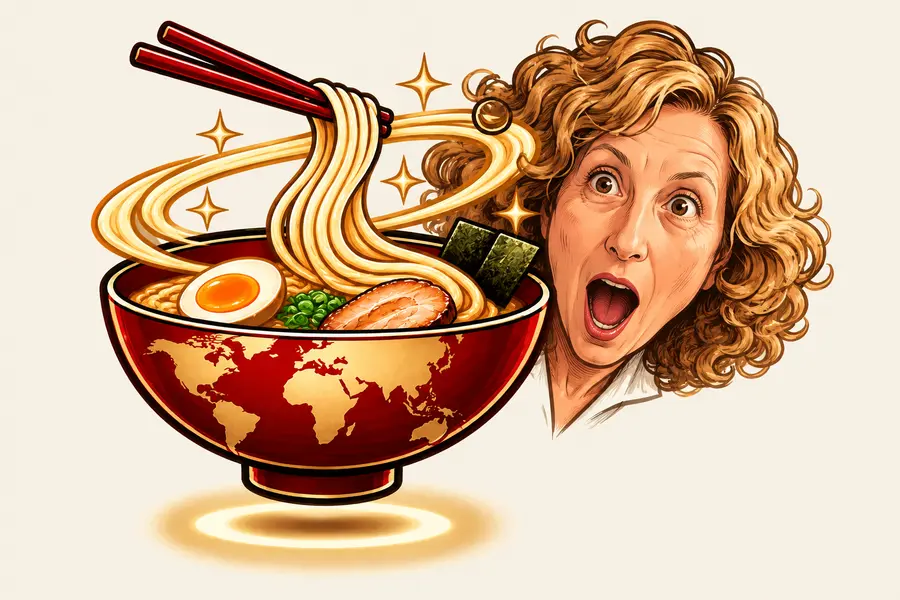
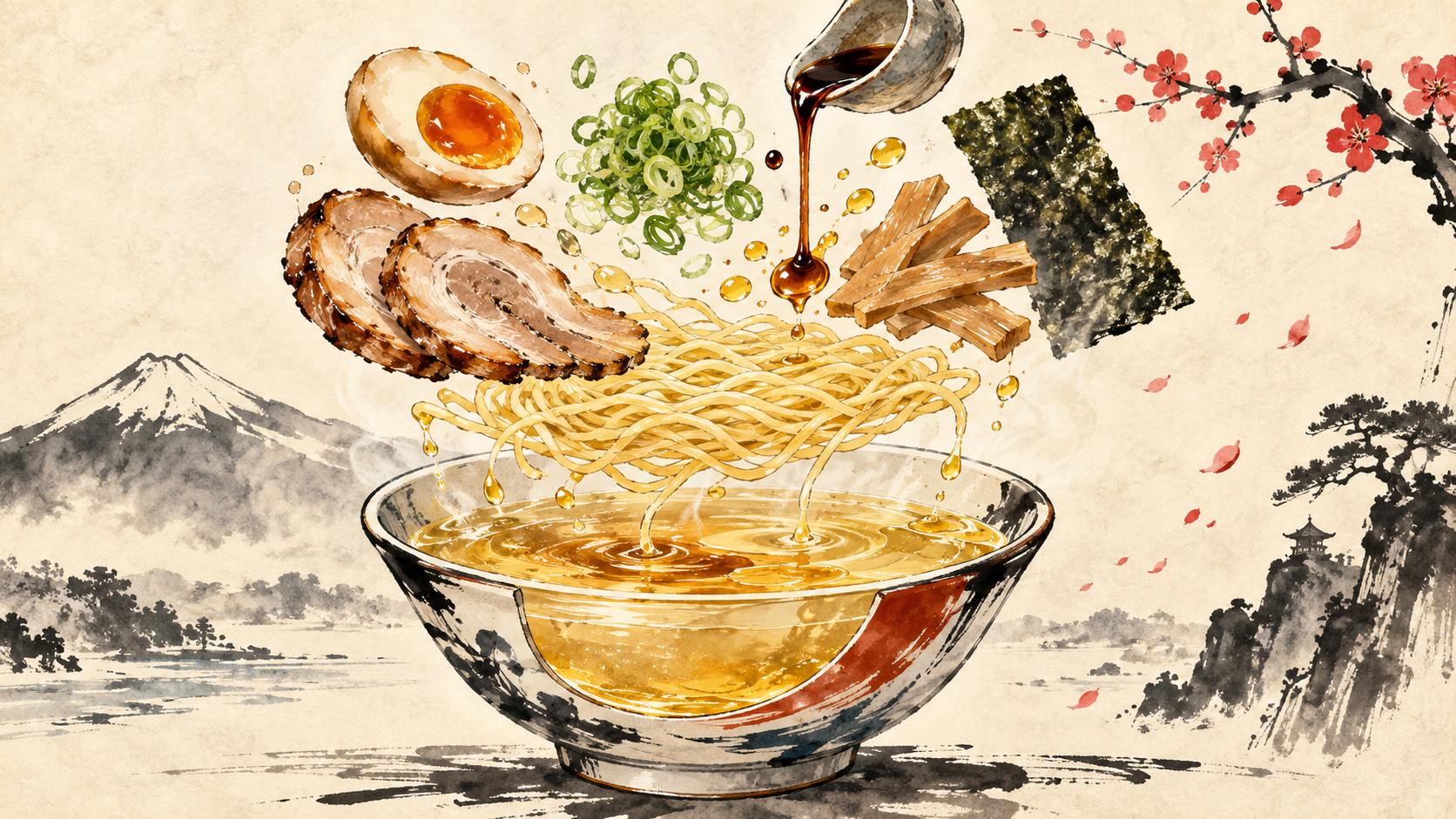
Illustrated anatomy of a ramen bowl with noodles, broth, tare and classic toppings

Ramen lexicon · ラーメン辞典

The language inside every bowl.

Learn what the menu really means—from the stock beneath the surface to the tiny details that change every bite.

01

Broth

The body

02

Tare

The seasoning

03

Aroma oil

The perfume

04

Noodles

The bite

Visual explanation of RamenAnatomy

Ramen

ラーメン

01

Say it · rah-men

A Japanese noodle dish built as a system: wheat noodles, seasoned soup and toppings. The best bowls balance each part rather than treating ramen as one fixed recipe.

Why it matters

Start by noticing four layers—broth, tare, aroma oil and noodles.
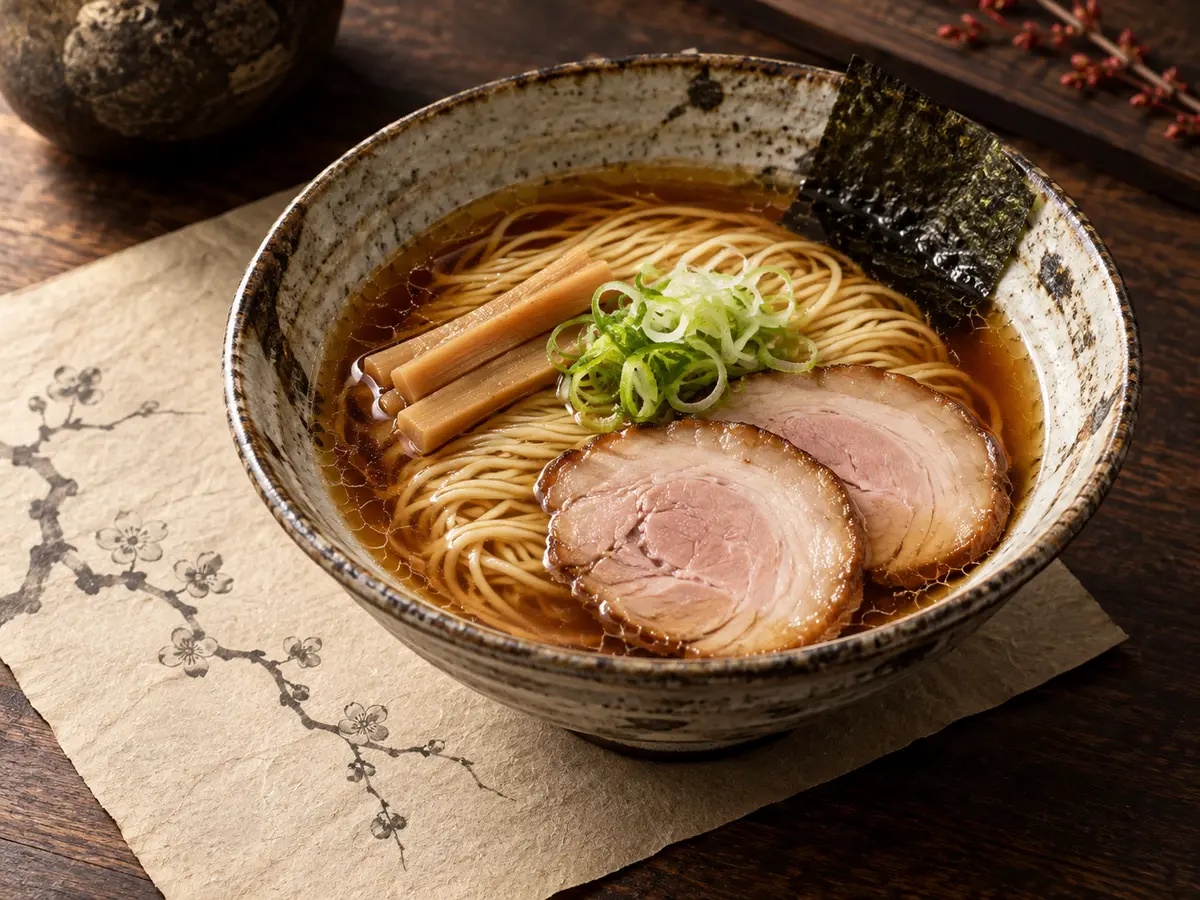
Visual explanation of BrothAnatomy

Broth

スープ

02

Say it · sūpu

The stock that gives the bowl its body. It may use chicken, pork, seafood, vegetables—or several together.

Why it matters

Broth supplies texture and depth; it is not usually the bowl's only seasoning.

Visual explanation of TareSeasoning

Tare

タレ

03

Say it · tah-reh

A concentrated seasoning base placed in the bowl before the soup. Shoyu, shio and miso are the three classic directions.

Why it matters

Tare sets the salt level and much of a ramen's identity.

Visual explanation of Aroma oilSeasoning

Aroma oil

香味油

04

Say it · kōmiyu

Fragrant fat—such as chicken oil, lard or seafood-infused oil—floated on the soup to carry aroma and add silkiness.

Why it matters

It is the first scent you meet and helps hot soup cling to the noodles.

Visual explanation of ShoyuStyles

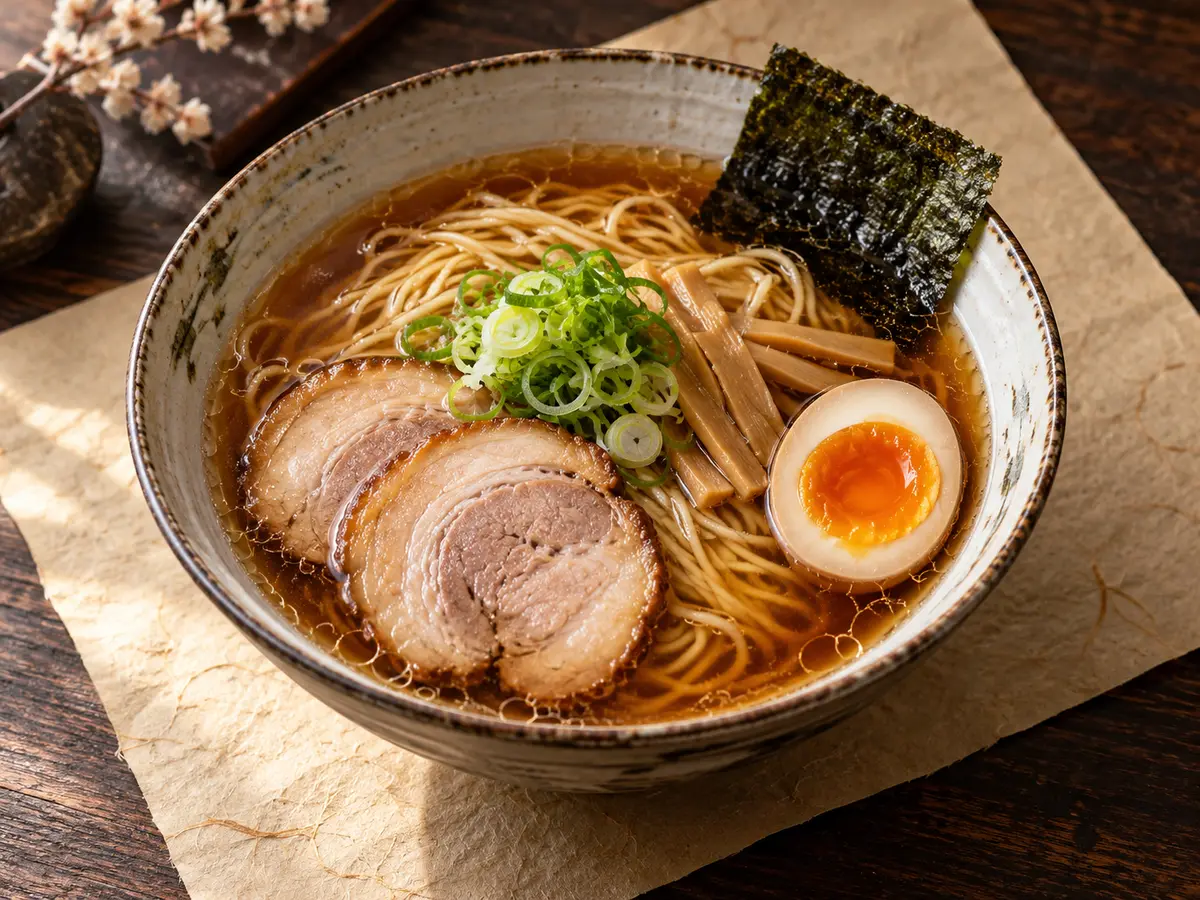
Shoyu

醤油

05

Say it · shō-yu

Ramen seasoned primarily with a soy-sauce tare. It can be light and crystalline or dark and powerful, depending on the stock and soy blend.

Why it matters

Shoyu describes the seasoning—not automatically the broth or richness.

Visual explanation of ShioStyles

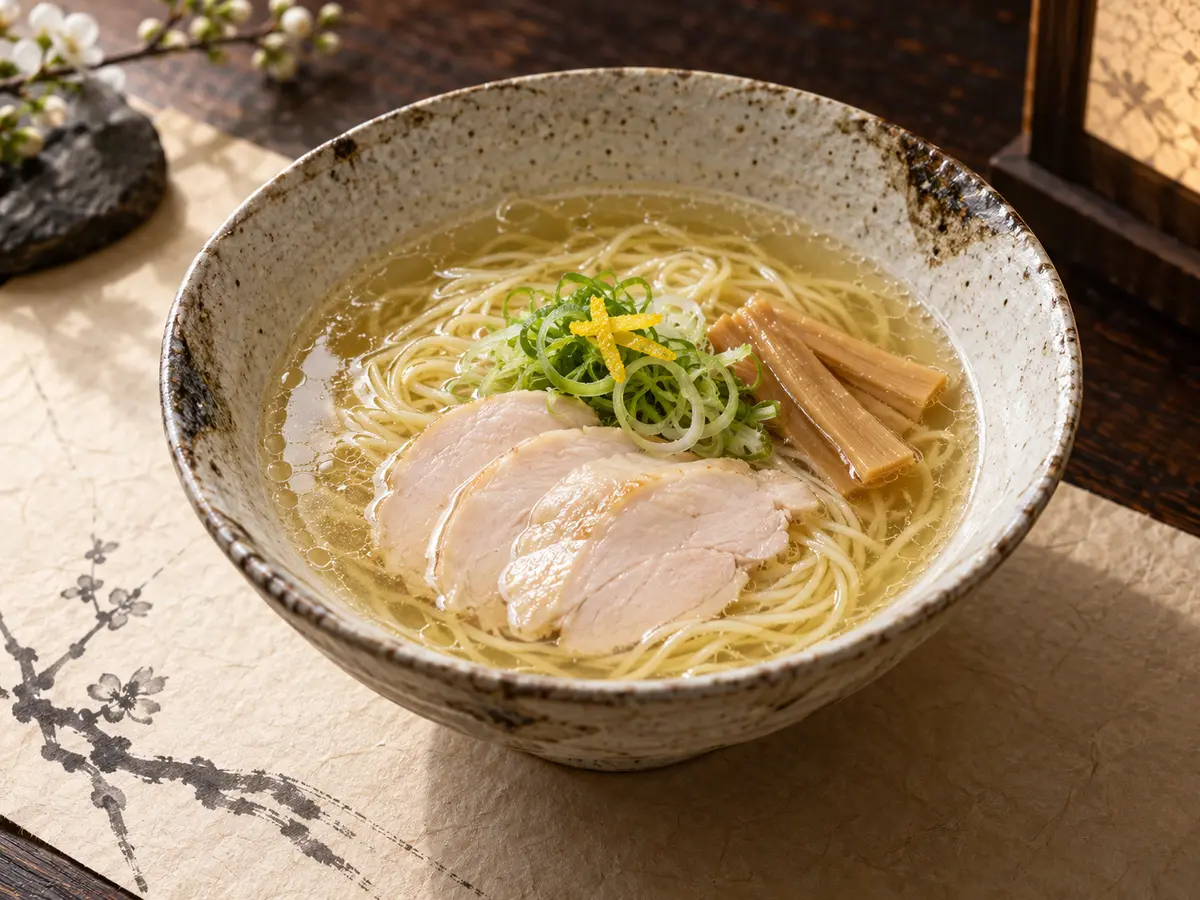
Shio

06

Say it · shee-oh

Ramen seasoned with a salt-based tare, often blended with kombu, dried seafood or light soy for complexity.

Why it matters

Its pale color exposes the quality and clarity of the underlying stock.

Visual explanation of MisoStyles

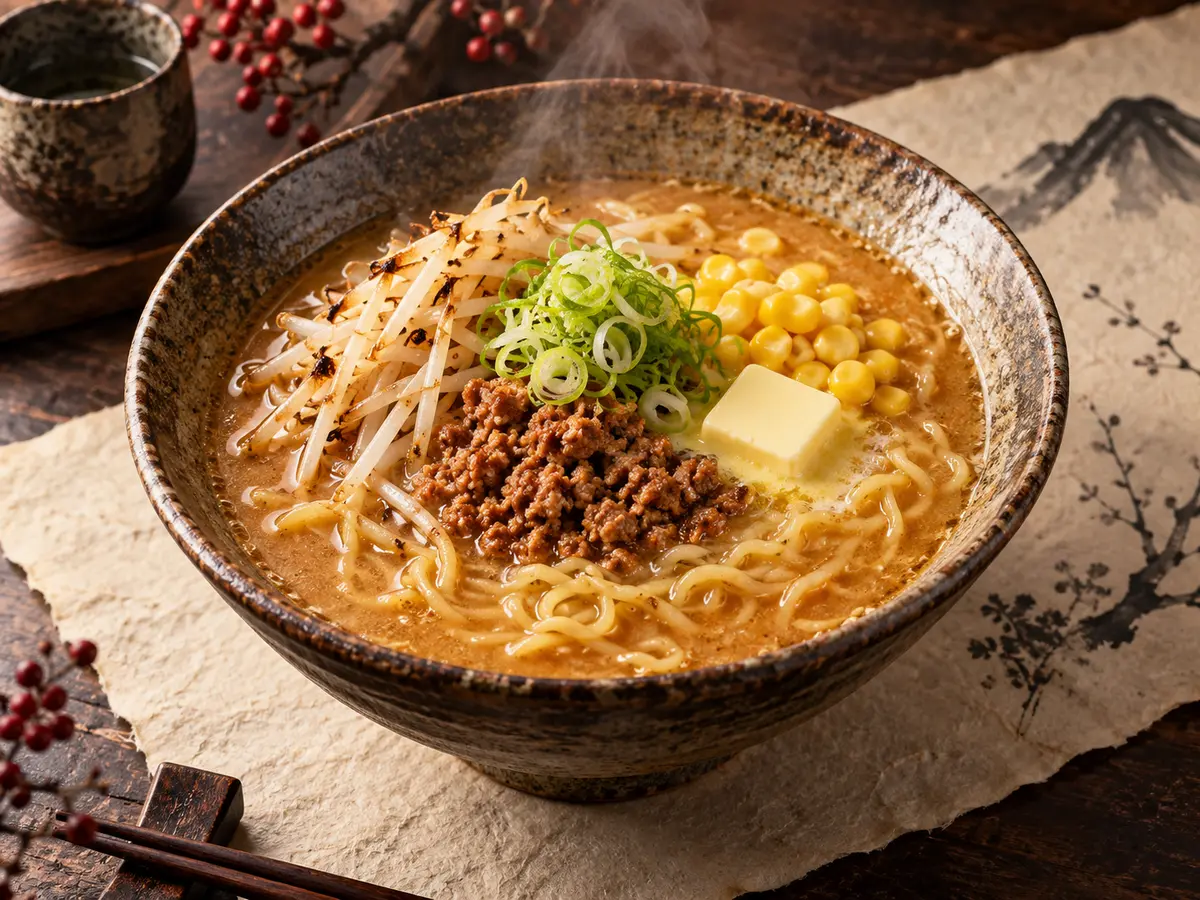
Miso

味噌

07

Say it · mee-soh

A fermented soybean-paste seasoning that produces a savory, rounded bowl. Sapporo versions often feature wok-fired aromatics, corn and butter.

Why it matters

Fermentation adds depth and stands up beautifully to fat and spice.

Visual explanation of TonkotsuBroths

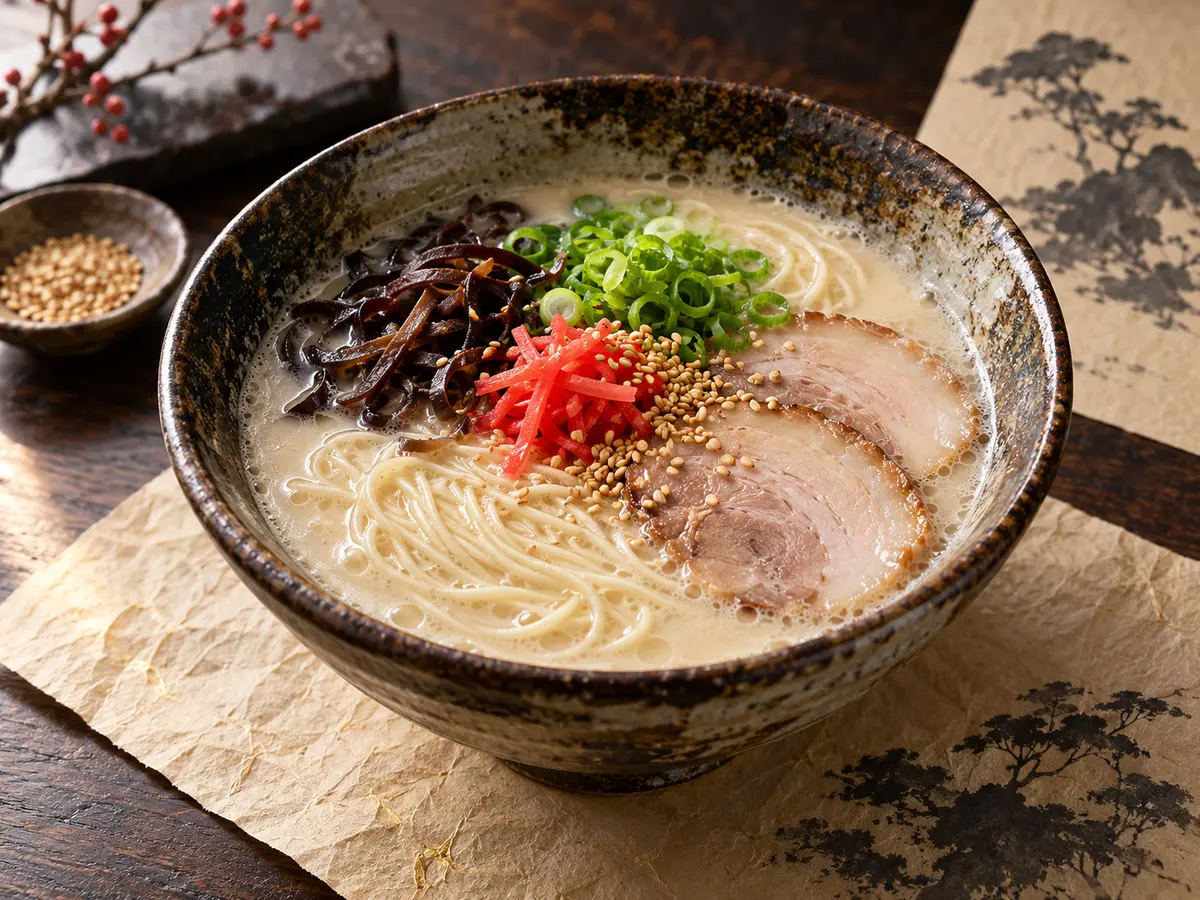
Tonkotsu

豚骨

08

Say it · ton-koh-tsu

Pork-bone broth cooked until collagen and fat emulsify into an opaque, creamy soup. It is closely associated with Hakata and Kyushu.

Why it matters

Tonkotsu is a broth, not a tare—it may still be seasoned with shio or shoyu.

Visual explanation of PaitanBroths

Paitan

白湯

09

Say it · pie-tan

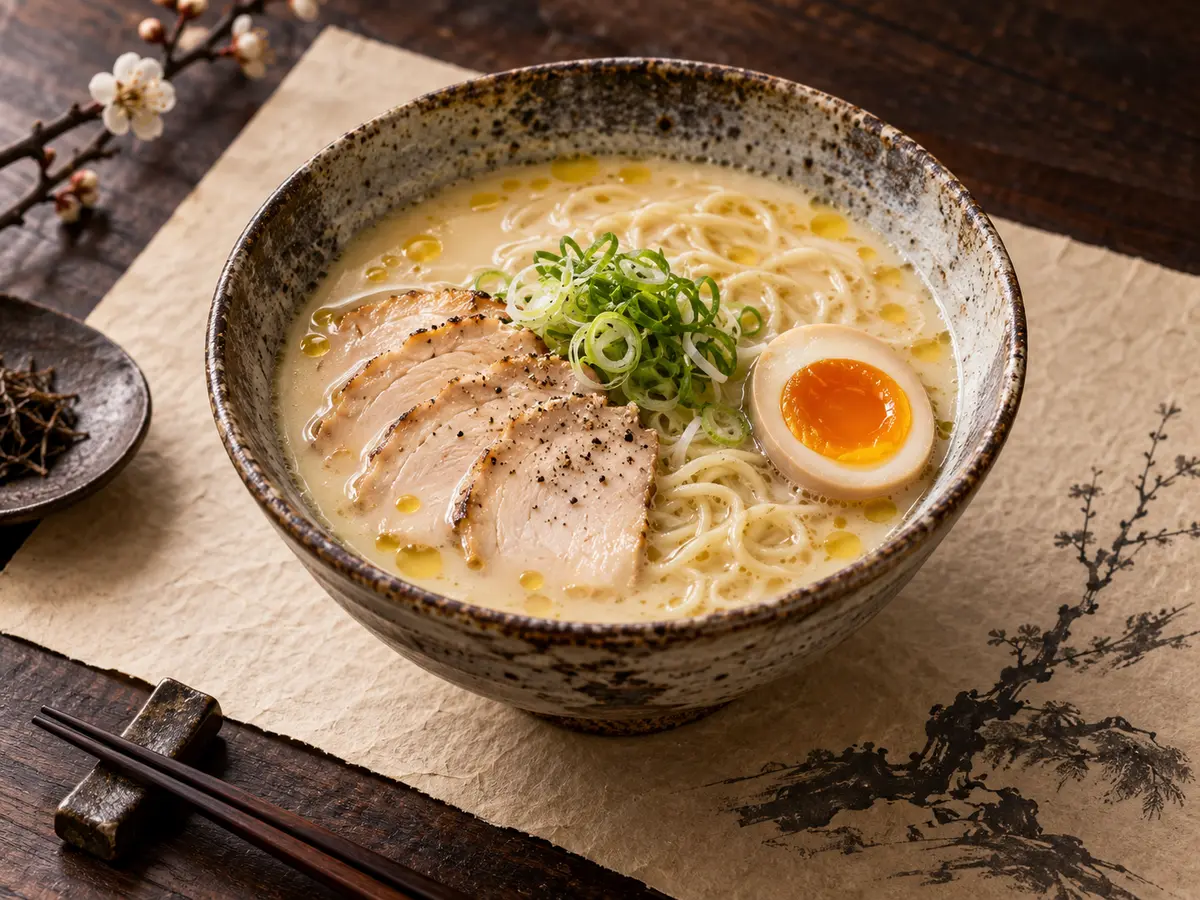
An opaque, emulsified stock made by extracting and dispersing fat and gelatin. It may be chicken, pork or even fish based.

Why it matters

Paitan describes the stock's technique and appearance, not its animal source.

Visual explanation of ChintanBroths

Chintan

清湯

10

Say it · chin-tan

A clear stock made with gentler heat and careful skimming, keeping fat and solids from clouding the soup.

Why it matters

Its elegance comes from clarity, aroma and precise seasoning.

Visual explanation of TsukemenStyles

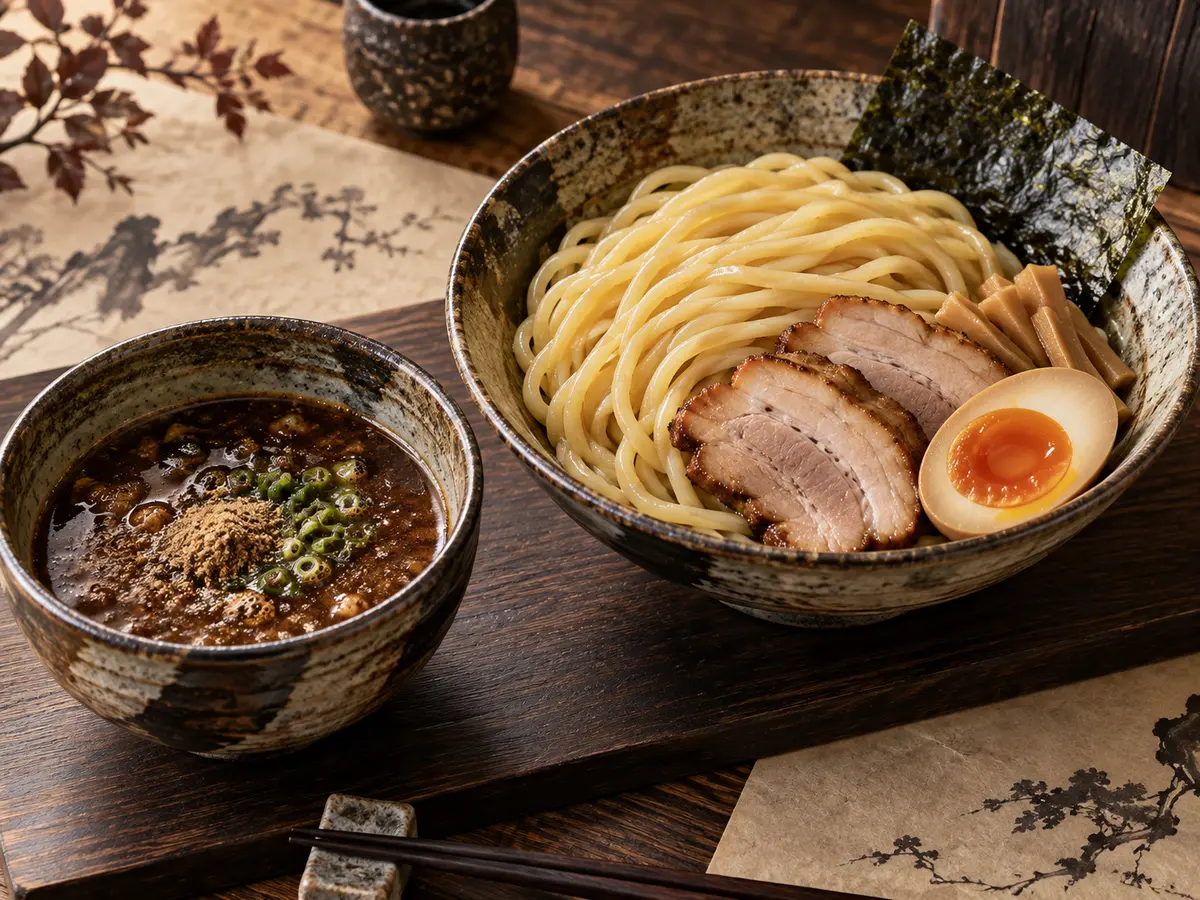
Tsukemen

つけ麺

11

Say it · tsu-ke-men

Noodles and a concentrated dipping soup served separately. Dip a bite at a time rather than pouring everything together.

Why it matters

The separate service highlights noodle texture and keeps every bite springy.

Visual explanation of MazesobaStyles

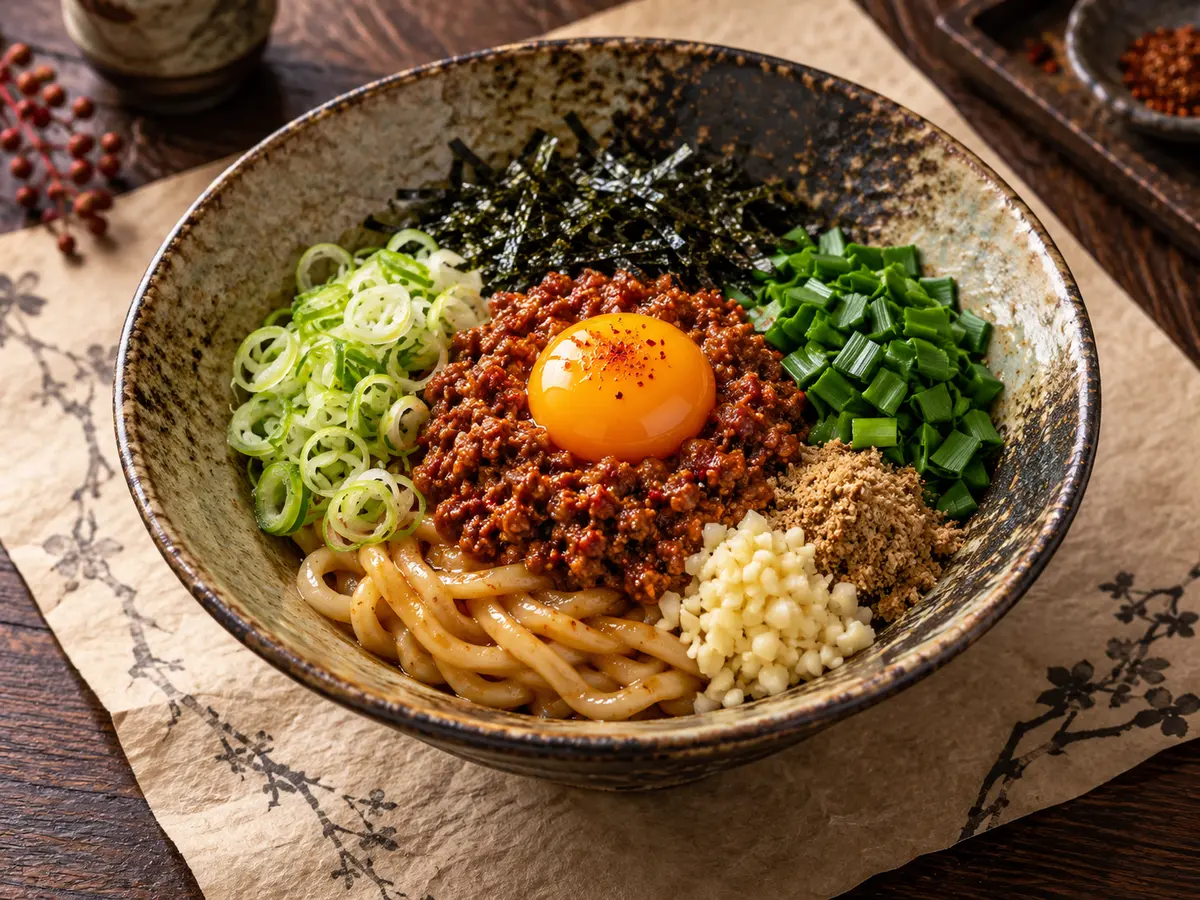
Mazesoba

まぜそば

12

Say it · mah-zeh-soh-bah

A brothless ramen in which noodles are thoroughly mixed with tare, flavored oil and toppings. Abura soba is a related style.

Why it matters

Mix from the bottom before eating so every strand gets seasoned.

Visual explanation of KansuiNoodles

Kansui

かん水

13

Say it · kan-swee

Alkaline salts added to ramen dough. They create the characteristic yellow tone, springy bite and unmistakable ramen aroma.

Why it matters

Without kansui, wheat noodles behave and taste more like ordinary noodles.

Visual explanation of ChashuToppings

Chashu

チャーシュー

14

Say it · chā-shū

Seasoned pork served sliced over ramen, commonly rolled belly or shoulder that has been braised, roasted or simmered.

Why it matters

Good chashu should be tender but still hold together in hot soup.

Visual explanation of AjitamaToppings

Ajitama

味玉

15

Say it · ah-jee-tah-mah

Short for ajitsuke tamago: a soft-cooked egg seasoned in a soy-based marinade, ideally with a jammy yolk.

Why it matters

It adds richness and a sweet-salty pause between noodle bites.

Visual explanation of MenmaToppings

Menma

メンマ

16

Say it · men-mah

Seasoned fermented bamboo shoots, prized for their gentle funk and crisp, fibrous bite.

Why it matters

Menma gives the bowl contrast—earthy flavor against rich broth and soft noodles.

Visual explanation of NoriToppings

Nori

海苔

17

Say it · noh-ree

A sheet of dried laver seaweed placed at the edge of the bowl, where it slowly softens in the steam and soup.

Why it matters

Eat it crisp or dip it for a burst of oceanic umami.

Visual explanation of KaedamaRituals

Kaedama

替え玉

18

Say it · kai-dah-mah

An extra portion of noodles ordered after the first serving, especially common with Hakata-style tonkotsu ramen.

Why it matters

Order while some soup remains, and choose noodle firmness if the shop allows.

Romanized pronunciations are practical approximations for travelers. Japanese usage and shop terminology can vary by region and ramen tradition.