
Japan · Fukushima · ramen culture
When ramen is breakfast.
In Kitakata, the first bowl of the day can be ramen. Follow that small change of schedule and a whole city comes into view: its noodles, its mornings and its old storehouse streets.
WorldRamenGuide editorial desk · Published 4 October 2026 · Sources checked 4 October 2026
A morning with its own name
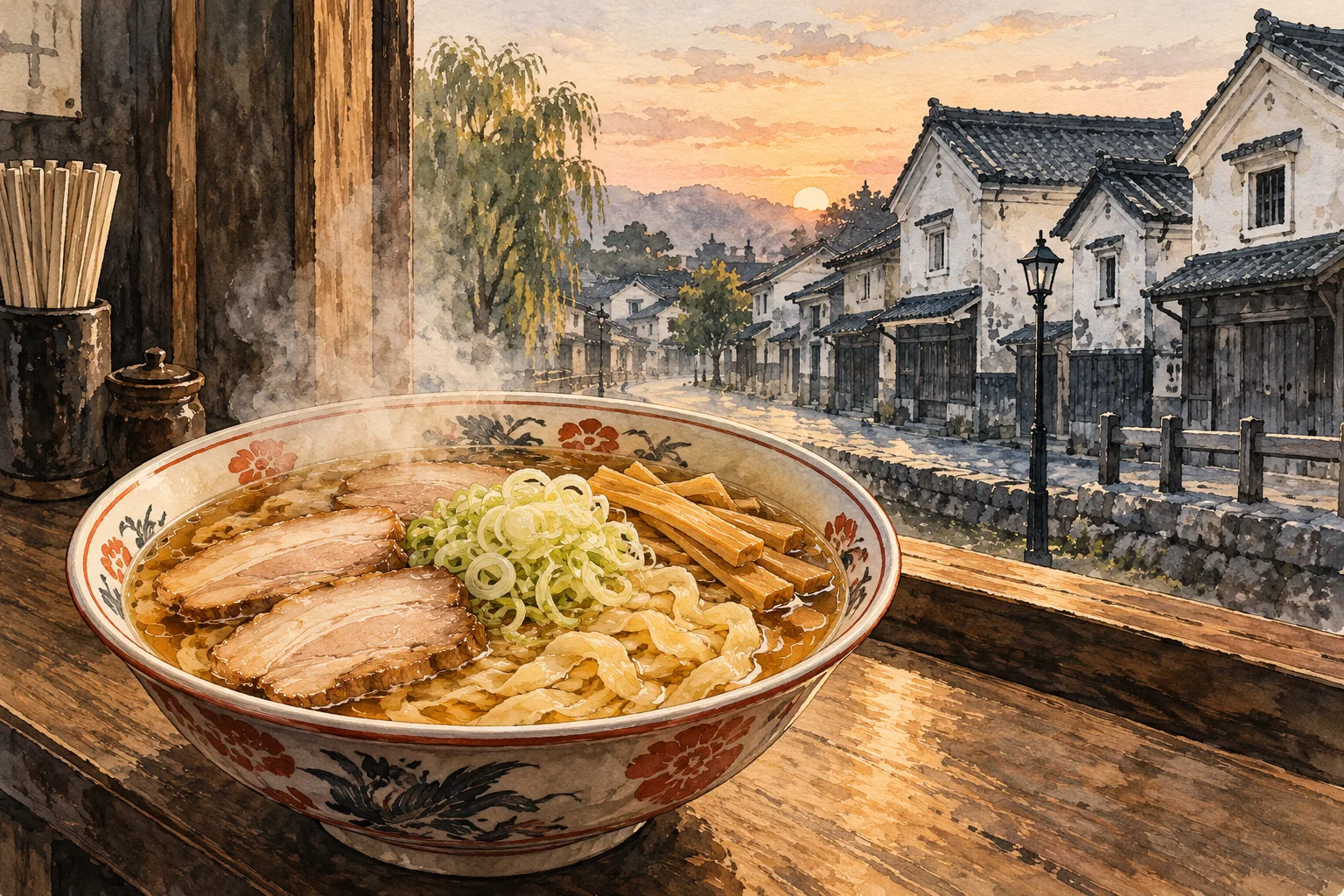
Kitakata’s local tourism association calls the custom asa-ra, a shortened way of saying morning ramen. Japan’s national tourism organization also describes breakfast ramen as part of the city’s food culture. This is a local habit that gives a visitor an unusual invitation: begin the day at a noodle counter instead of saving the bowl for lunch.
The precise beginning of the custom is less certain. The local association offers several possible explanations, including meals after factory night shifts or early farm work. They are possibilities, not a proven single origin story. What is clear from both tourism sources is that morning ramen is now part of Kitakata’s identity.
The noodle is the first clue
Kitakata’s tourism association describes resilient, flat, curly noodles. The Japan National Tourism Organization independently describes thick, flat, curly noodles, while Fukushima Prefecture’s tourism guide pairs crimped noodles with a refreshing soy sauce soup, pork, bamboo shoots and spring onions. Those descriptions are useful landmarks, not a recipe every shop must obey.
Look at the noodles before deciding what the broth is doing. Their broad, rippled shape changes the pace of a mouthful: there is something to chew and a surface for the soup to cling to. Then notice the stock. JNTO describes one familiar Kitakata version as using pork and niboshi, or dried sardines; another local bowl may take a different route. The pleasure is in comparing interpretations, not insisting on a single correct one.
Take the bowl into the town
Kitakata is in Fukushima Prefecture. JNTO describes its center as a place to walk among kura, traditional storehouses, some converted into shops and other businesses. That makes a simple morning plan: choose a ramen counter that confirms it serves breakfast, eat slowly, then walk through the old streets. The town’s food and built environment belong in the same visit.
Do not rely on a guide’s old opening time or assume every ramen shop opens early. Check the individual shop’s current official information before leaving, especially if the bowl is the reason for an early train. The city’s tourism association links to a current ramen guide, and our Kitakata city guide is a starting point for comparing the curated places in the area.
Why this breakfast stays with you
Morning ramen changes the rhythm of travel. A bowl that might have felt like the end of a day becomes its beginning. In Kitakata, the custom also points to a wider truth about Japanese ramen: its meaning changes with the place and the people who eat it. For another regional lens, visit our Hokkaido ramen story, or use the ramen lexicon to read the menu with more confidence.