Japan · Hokkaido · ramen culture
Three cities. Three ways to keep a bowl warm.
In Hokkaido, the word “ramen” does not point to a single bowl. Travel between Sapporo, Hakodate and Asahikawa and you meet three different answers to the same question: what should a bowl taste like here?
WorldRamenGuide editorial desk · Published 29 September 2026 · Sources checked 29 September 2026
A northern island, more than one style
Japan’s Ministry of Agriculture, Forestry and Fisheries identifies three well-known Hokkaido traditions: miso ramen in Sapporo, shio ramen in Hakodate and shoyu ramen in Asahikawa. The ministry describes how local approaches developed as ramen became part of Hokkaido’s everyday food culture after the war. These are useful starting points for a traveler, not rules that every shop must follow.
The distinction begins with seasoning. Miso brings fermented soybean paste to the bowl; shio means salt seasoning; shoyu means soy sauce seasoning. A shop can combine these with different stocks and toppings, so the name on a menu tells you something important without telling the whole story.
Sapporo: the comfort of miso
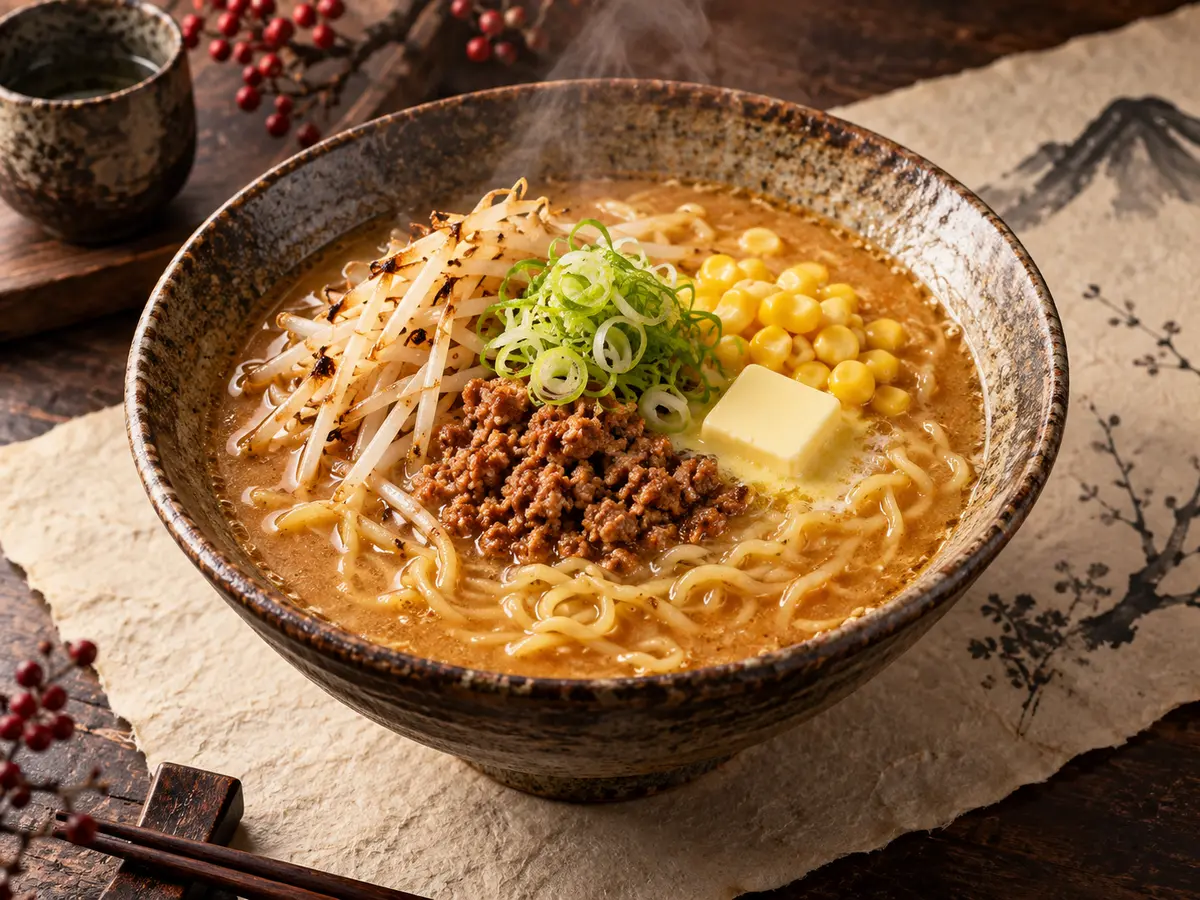
Sapporo is strongly associated with miso ramen. The Japan National Tourism Organization describes the city’s version as commonly served with wavy noodles and, in some shops, vegetables, butter or corn. The exact combination changes from counter to counter. What makes a visit interesting is seeing how the cook balances the miso’s depth with the stock and the noodles, rather than searching for one supposedly definitive bowl.
Begin with a miso bowl, then try a second shop if you have the time. Notice whether the soup feels rounded and sweet, sharp and savory, or lifted by vegetables. The difference between two bowls in the same city can teach you as much as the difference between cities.
Hakodate: clarity in a salt-seasoned bowl
Hakodate’s best-known ramen tradition is shio. The agriculture ministry describes a clear pork-bone broth with comparatively little fat and a lighter taste. “Salt” refers to the seasoning, not to an absence of craft. In a clear bowl, the aroma of the stock, the texture of the noodles and the timing of service have nowhere to hide.
Order shio when you want to taste how much character can fit inside restraint. Look at the broth before you take the first sip. Then taste it again after the noodles have sat in it for a minute: even a quiet bowl changes as you eat.
Asahikawa: heat held beneath the oil
Asahikawa is associated with shoyu ramen. The agriculture ministry notes a practical detail of some local bowls: a layer of flavored oil helps keep the soup hot in cold weather. That is a small piece of food culture you can experience directly. The first sip may be hotter than the surface suggests, so give the bowl a moment.
The idea is not that climate mechanically dictates every recipe. It is that a way of cooking can respond to the place where people eat. A bowl designed to stay warm through a northern meal carries a local decision in its very surface.
How to travel through the three bowls
If you are visiting Hokkaido, use these styles as a tasting compass. Ask for miso in Sapporo, shio in Hakodate and shoyu in Asahikawa, then let each shop show its own interpretation. Check the current menu, location and hours before traveling; ramen counters can change service or sell out. For a wider context, read our ramen lexicon or explore the Japan city guides.
There is no need to crown a winner. The pleasure is realizing that a familiar dish can speak with a different accent a few hours down the road.